
Today Is Nothing Like 1929
In March 1929, 68 of Wall Street's wealthiest men—including GM's William Durant and Walter Chrysler — pooled $12.6 million to drive up the price of RCA stock. In nine trading days, they pushed it up nearly 50 percent, sold, and walked away with a $5 million profit. And not a single law was broken.
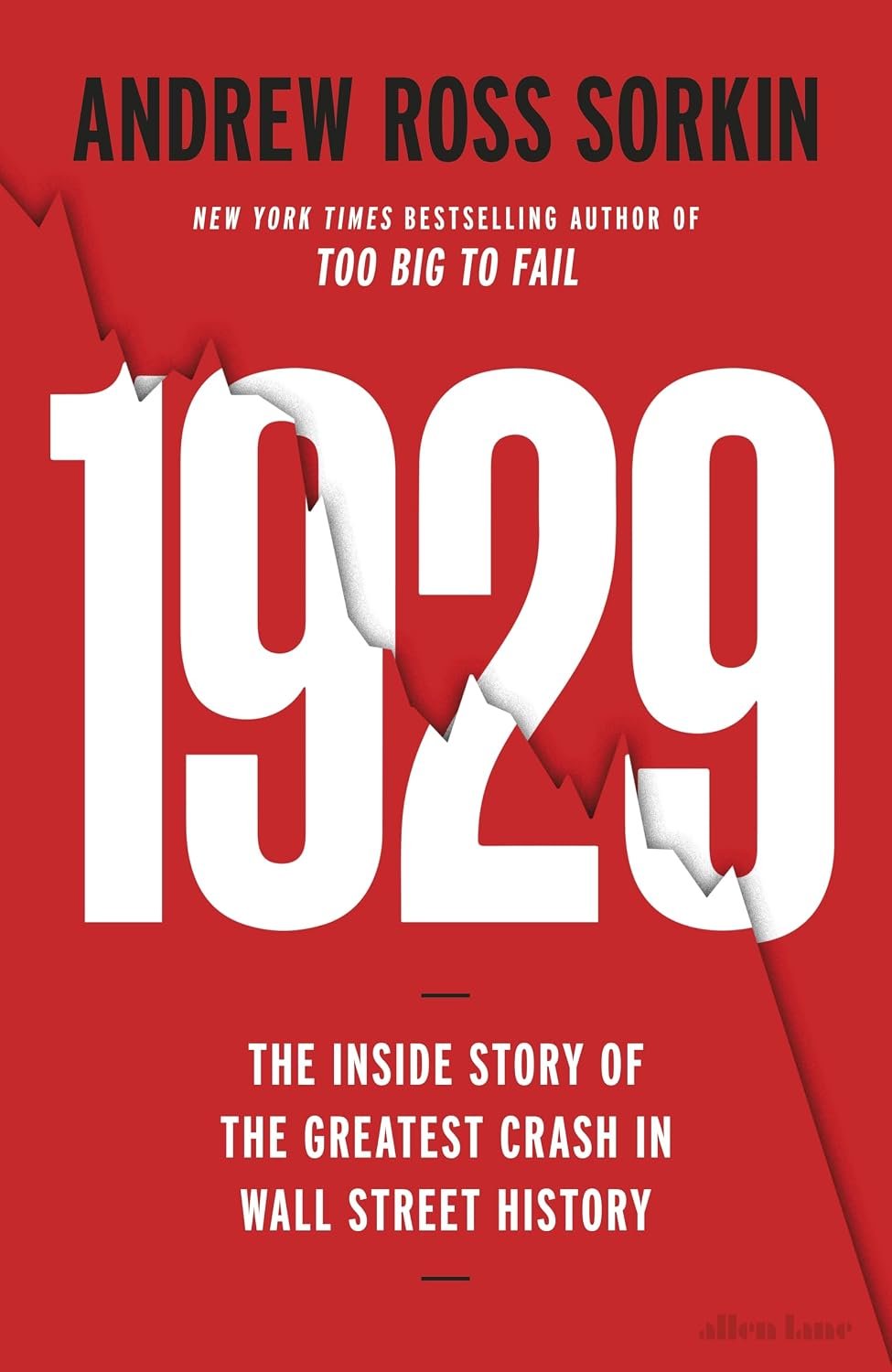
I’ve finally had the chance to read Andrew Ross Sorkin’s new best-selling book, 1929: Inside the Greatest Crash in Wall Street History—and How It Shattered a Nation. I’ve read some headlines comparing 1929 to today. I also saw Sorkin’s appearance on 60 Minutes, where he didn’t shy away from drawing some parallels between then and now. But what he said in that interview and what he says in the book, highlight just how different financial markets are today.
One of the most alarming features of the stock market in 1929 was the pervasive market manipulation by insiders. According to Sorkin, investment “pools” were the primary manipulation tool of the era. These pools would enlist a group of wealthy insiders, brokers, and company executives to pool their money and target one stock. They’d feed tips to financial journalists and plant rumors to draw in public investors. Once outside investors piled in and drove the price higher, the pool of insiders would quietly sell the stock and exit with a tidy profit.
That RCA pool was run by New York Stock Exchange (NYSE) specialist Michael Meehan, whose position as a market insider gave him a massive conflict of interest. At the time, the NYSE was self-regulated and largely tolerated the practice because insiders and exchange members profited from it.
Another glaring difference between then and now was the amount of debt that stockholders carried to make their trades. It was common in 1929 for brokers to require just 10 percent down to buy a stock. This allowed investors to put up $100 to buy $1,000 worth of stock, an enormous amount of leverage. There was no federally regulated margin requirement until the 1934 Securities Exchange Act.
This leverage in the stock market was a big part of its eventual downfall. When a stock falls even a little, it can trigger margin calls that force investors to sell, creating a downward spiral in prices. This is exactly what happened in the market panic of October 1929. Compare that 10-to-1 leverage with today’s rules, which cap leverage at 2-to-1, and mandate far stricter maintenance requirements.
Sorkin’s book also highlights the inexperience of the Federal Reserve. The Fed was only 16 years old in 1929 and had no real playbook for how to handle a speculative bubble or crash. The Fed was internally divided and slow to act. Some Fed members wanted to raise interest rates to choke off speculation earlier that year, but the Board resisted. The Fed then opted to hike the discount rate in August 1929, right before the crash, tightening credit in an already fragile market.
The Fed had no real tools for what came next. It had little experience acting as an effective lender of last resort for banks. When banks started failing all over the country in the early 1930s, the Fed largely stood by and watched the money supply collapse. To make matters worse, there was no deposit insurance for depositors, as the FDIC didn’t exist until 1933.
The Fed in 1929 was a young institution improvising in real time with almost no crisis-management tools. Contrast that with today's Fed, which has nearly a century of crisis playbooks including the providing of overnight liquidity direct lending authority, lender-of-last-resort authority, and deposit insurance backing the banking system.
I’m not suggesting that everything in the financial system is perfect today. In fact, these issues persist, but the guardrails are far more robust. The concerns today about market manipulation are nothing like the blatant conflicts of 1929. Investors have increased their leverage in the last few years, but again it pales in comparison with 1929. The Federal Reserve certainly has its shortcomings, but at least it has some more tools at the ready.
The potential for severe bear markets like 2008 still exists, but a severe crash like 1929 seems to us far less likely. The financial system today has far more protections than it did in then, and financial markets are more mature. It's always worth learning from history—and in this case, the lessons of 1929 are exactly what should keep it from being repeated in 2026.
This article first appeared in The Berkshire Business Journal